The Indian Space Research Organisation (ISRO) has postponed the launch of Chandrayaan-2, the country's second lunar mission, to July of this year.
"All the modules are getting ready for Chandrayaan-2 launch during the window of 9 July to 16 July 2019, with an expected Moon landing on 6 September 2019," an ISRO statement read.
It is believed that the lander (Vikram) suffered a minor technical snag last month during a test, which delayed the launch once again.
"This is a very complex mission and the earlier dates were estimates. But the procedures took longer than expected," ISRO spokesperson Vivek Singh said.
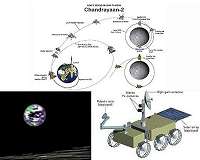
The Orbiter and Lander modules will be interfaced mechanically and stacked together as an integrated module and accommodated inside the GSLV MK-III launch vehicle. The Rover (Pragyan) is housed inside the Lander.
"After launch into earthbound orbit by GSLV MK-III, the integrated module will reach lunar orbit using its Orbiter propulsion module. Subsequently, the Lander will separate from the Orbiter and land softly at the predetermined site, close to the lunar South Pole. Furthermore, the Rover will carry out scientific experiments on the lunar surface," the ISRO added.
The lander is a crucial part of the second lunar mission undertaken by India. It is intended to soft land on the lunar surface at a specified site to deploy a six-wheeled vehicle rover.
The rover, powered by solar energy, will collect information for at least 14 days and cover an area with a 400-meter radius. The instruments on the rover will conduct the in-situ analysis of elements such as sodium, magnesium, aluminum, silicon, etc. in the vicinity of the landing site.